
How does your brand stand up when travel doesn’t go to plan?
Global challenges aren’t new. Travel has always had to navigate uncertainty. What’s changed is the scale, speed and visibility of those challenges.
Today’s travel industry is more connected, more digital, and more exposed than ever before. Journeys now span complex global supply chains – airlines, cruise lines, ports, ground handlers, accommodation providers, all tightly interconnected. A single issue can cascade rapidly across systems, partners and geographies. Add to this, technology has enabled real-time operations but also created real-time dependency.
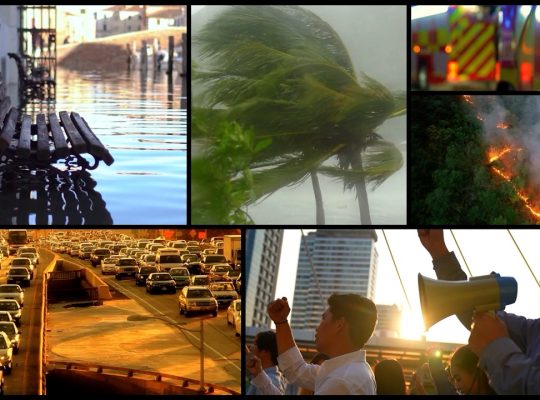
As highlighted by the World Economic Forum, the future of travel is increasingly shaped by the combined impact of geopolitical instability, climate risk, economic pressure and digitalisation, forces that are no longer isolated, but deeply interconnected.
At the same time, digital transformation has fundamentally changed expectations. Travellers now live in a world of instant access, constant updates and complete transparency. Smartphones, social media and always-on connectivity mean people expect information in real time and will share their experiences just as quickly.
This creates a new reality: disruption doesn’t just happen faster. It’s felt faster, seen faster, and judged faster.
The operational pressure behind every disruption
When disruption hits, travel brands don’t just adjust plans. They absorb the consequences.
A cruise line may need to reroute an entire voyage, reshaping itineraries, securing alternative ports, coordinating suppliers and managing the knock-on effect across crew, logistics and operations.
Airlines rework schedules, reposition aircrafts and manage passenger disruption at scale. Tour operators juggle accommodation changes, transport and local partners across multiple destinations, often all at once.
And because systems are so tightly interconnected, even a small issue can escalate quickly. A short technical failure or operational delay can ripple across networks, creating widespread disruption, delays and cancellations, often within minutes.
All of this happens behind the scenes, but the pressure is very real. Costs rise. Teams stretch. Processes strain. And while your teams are working to resolve it, something else is happening at the same time.
The moment your customers experience it
Behind the scenes, your teams are working hard to manage complexity. But your customers experience something very different. They don’t see the operational effort, but they feel the outcome.
Uncertainty when plans change. Silence when updates don’t come. Confusion when information isn’t clear. Or, they feel clarity, reassurance and confidence. That difference matters.
Because in today’s connected world, those moments don’t stay private. They’re shared, amplified and remembered, shaping perception of your brand long after the journey ends.
Research from McKinsey & Company shows that customer trust is shaped most strongly during moments of disruption, not when things go smoothly.

In other words: your brand isn’t just defined by the journeys you plan, it’s defined by how you respond when they change.
Duty of care, delivered in real time
This is where duty of care takes on a new meaning. It’s no longer a policy or a process. It becomes a real-time capability.
When disruption happens, duty of care is about more than safety. It’s about keeping travellers informed, reducing uncertainty and helping them feel supported when it matters most.
The challenge is that many travel businesses weren’t built to deliver this consistently at scale.
Even with the right intent, delivery can be fragmented. Data sits across multiple systems. Visibility is delayed. Teams work hard, but without always having the full picture. Communication becomes reactive, inconsistent, and sometimes too late.
And when it comes to disruption, timing is everything.
The visibility gap: why response falls short
The biggest risk isn’t just the disruption itself; it’s the loss of visibility.
When multiple events unfold across regions, suppliers and systems, understanding what’s happening (and what it means) becomes harder.
Without clear, real-time insight decisions slow down, priorities compete, responses become disconnected. And the gap between operational reality and customer experience begins to widen.
Closing that gap can make all the different to your brand.
Disruption Intelligence: clarity when it matters most
To manage disruption effectively, you first need to see it.
Disruption Intelligence provides real-time visibility across your travel ecosystem, detecting emerging risks, identifying potential issues early, and surfacing what matters most.
It provides context. Not just what’s happening, but what it means for your operations, your customers, and your next move.
So instead of reacting late, you can anticipate. Instead of guessing, you can act with confidence.
TravelComms: turning insight into action

But visibility alone isn’t enough. Knowing something has changed doesn’t help your customers unless you respond to it.
TravelComms transforms insight into clear, coordinated and personalised communication, delivered at scale. Every message reflects the situation, the traveller and the stage of their journey.
Not generic messages. Not delayed responses.
But communication that feels relevant, timely and reassuring. And crucially, reflects your brand, even in the most challenging moments.
Together, Disruption Intelligence and TravelComms enable something more powerful than operational response. They create control.
Control over how disruption is managed, how customers experience it and how your brand is perceived.
While in today’s travel landscape disruption is inevitable, loss of confidence isn’t.
Raising the standard for travel brands
Every travel brand will face disruption. Some will react. Others will lead.
The ability to see clearly, respond quickly and communicate effectively is what separates reactive businesses from resilient ones.
And in the moments that matter most, the ones your customers remember, that difference is everything.
Looking ahead
Global challenges aren’t going away. If anything, they’re becoming more complex, more connected and more frequent.
But that doesn’t mean travel brands have to operate on the back foot.
With the right visibility, the right tools and the right approach, disruption can be managed with clarity, confidence and control.
Because the future of travel won’t be defined by whether disruption happens. It will be defined by how well you respond when it does.